
Review · NEW ZEALAND
Bay of Islands: 12,000ft Skydive
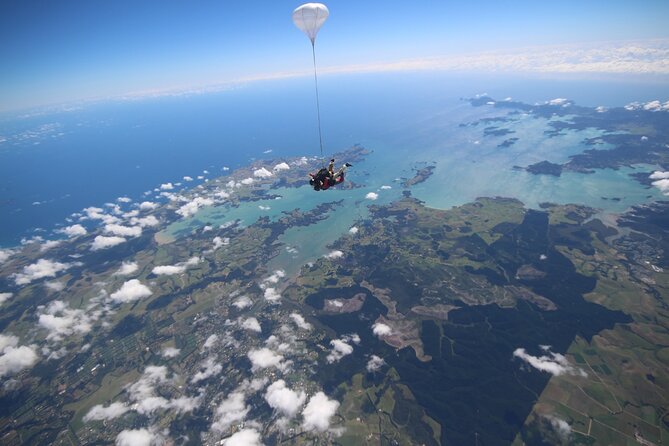
The Bay of Islands looks different from the sky. This tandem jump gives you 40 seconds of freefall from 12,000 feet, followed by a slower ride down over 144 islands, bright water, beaches, and the Northland coast. You jump with an experienced instructor, and all training and safety equipment are provided.
I like the spectacular aerial views and the well-organized setup praised by customers, who describe the operation as efficient and tightly run. I also like the choice of jump times and pickup from selected Paihia and Kerikeri locations. The main drawback is weather: a scheduled jump can take 1.5 hours, but you should allow two to four hours in case conditions or aviation requirements cause delays.
Key points to know before you book
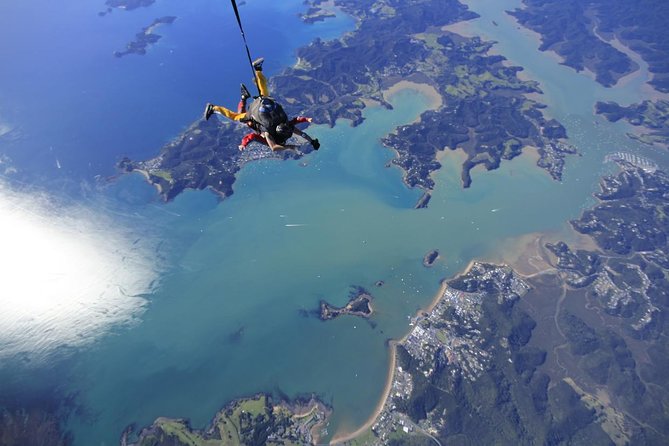
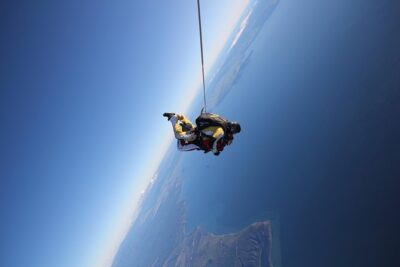
- The 12,000-foot jump gives you about 40 seconds of freefall, followed by a gentler descent under the parachute.
- You can see the Bay of Islands from a rare angle, including its 144 islands, blue water, beaches, and coastal towns.
- The operation limits the group to 20 people, which helps keep the day manageable.
- Pickup is available in selected central Paihia and Kerikeri locations, but the listed meeting point is at 182 Wiroa Road, Kerikeri.
- The 100-kilogram weight limit is strict, so contact the operator in advance if you may be close to it.
- Photos and video cost extra, including the option of a separate videographer on some higher-altitude jumps.
Why a Bay of Islands skydive is worth considering
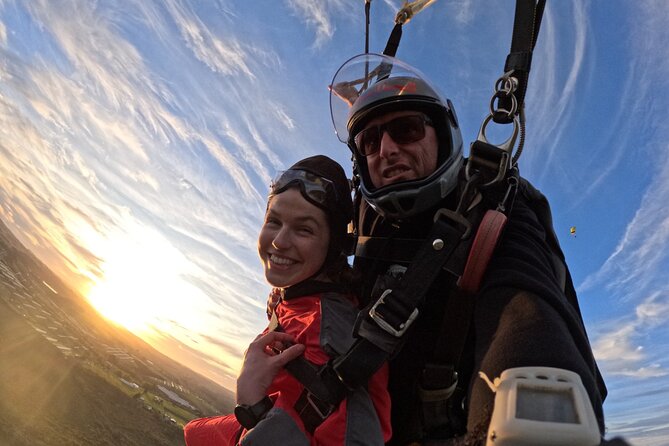
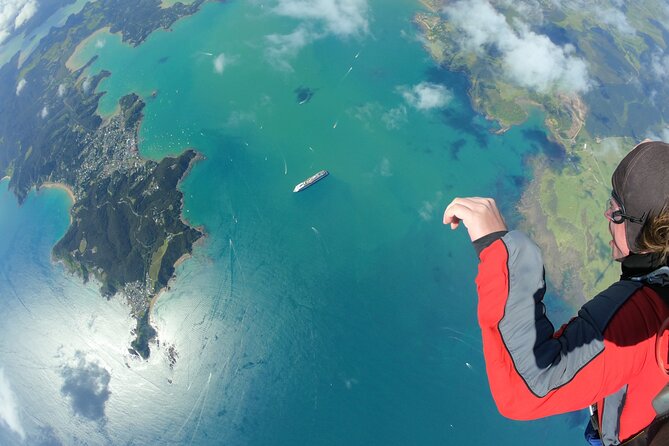
The Bay of Islands is already a fine place for a boat trip. From the air, you get a much bigger picture. The coast breaks into small headlands, pale beaches, forested islands, and clear water that shifts in color as the light changes. You may spot Paihia, Russell, Waitangi, Cape Brett, and the Hole in the Rock area during the flight and descent.
This is not a sightseeing flight with a comfortable seat and a cup of tea. You are paying for an adrenaline activity first, with sightseeing added in. That distinction matters. The freefall is noisy, fast, and physically intense. You will not spend those 40 seconds calmly identifying every island below you.
Once the parachute opens, the pace changes. You have more time to take in the coast and may get the best chance to appreciate the Bay of Islands. The whole experience combines a sharp burst of fear and excitement with a longer, quieter view on the way down.
The 12,000-foot height is a sensible middle choice. It gives you a substantial freefall without automatically choosing the most expensive or extreme option. The supplied information also refers to higher jumps, including an 18,000-foot option with supplemental oxygen and the possibility of a separate videographer. That option is not part of the basic 12,000-foot price, so check the extra cost before planning around it.
More Skydives in New Zealand:
- Skydive Auckland
★ 5.0 · 1,516 reviews - NZONE Skydive Queenstown
★ 4.5 · 1,438 reviews - Queenstown: Tandem Skydive Experience
★ 4.8 · 475 reviews
What the day is likely to feel like
The advertised duration is about four hours, though the actual skydive often takes around 1.5 hours. That extra time is not wasted padding. Skydiving is an aviation activity, and weather, aircraft schedules, and other operational needs can change the timing.
You first reach the drop zone at 182 Wiroa Road in Kerikeri, unless you arrange one of the selected pickup points. Pickup and drop-off are offered from central Paihia and Kerikeri, but hotel pickup is not included. If you are staying outside those areas, you need to arrange your own transport.
At the center, you receive your briefing and safety instructions. You will be fitted with the required equipment and paired with your tandem instructor. The instructor handles the technical parts of the jump, but you still need to listen carefully and follow directions.
The small maximum group size of 20 is helpful. It does not guarantee that your personal wait will be short, but it limits the total number of people moving through the operation. One useful practical rule is that booked jumpers take priority in the shuttle vans. Spectators may be accepted, but they could need another way to get around if the vans are full.
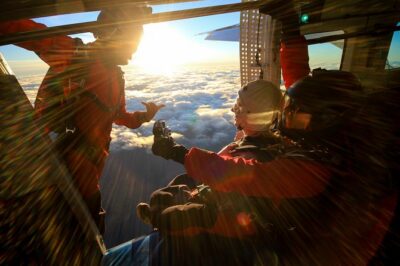
The aircraft ascent gives you time to settle your nerves and look out over Northland. At 12,000 feet, the main event arrives quickly. You and your instructor exit together, with roughly 40 seconds of freefall before the parachute opens.
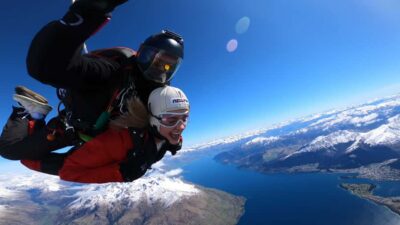
The freefall is the most dramatic part, but it is not the only reason to choose this location. Under the parachute, you can appreciate the shape of the bay, the islands, and the coast in a way you cannot from ground level. If you want photographs or video, buy the package in advance if possible and confirm exactly what is included.
The view toward the Bay’s 144 islands
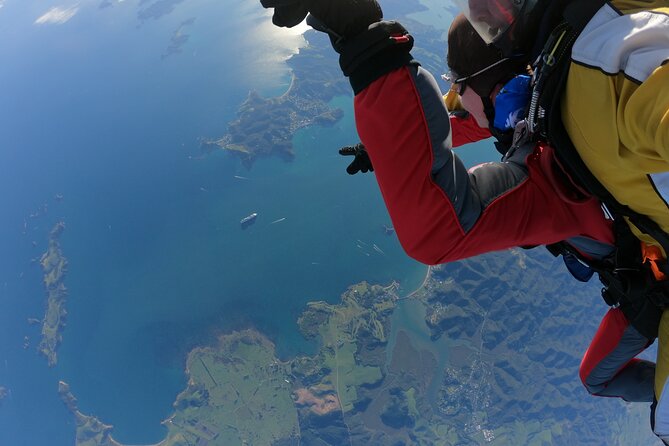
The Bay of Islands contains 144 islands, with small coves, beaches, and open water spread across the northeastern coast. From the air, the islands become a pattern rather than a list of separate stops. The shape of the bay is easier to understand from above, especially as the parachute carries you back toward the drop zone.
The color of the water is one of the main rewards. Clear blue water, lighter shallows, and darker channels create a strong contrast with the land. Conditions and visibility will affect what you see, so do not assume every island will be equally clear on every jump.
The jump also gives you a useful sense of the region’s scale. Paihia, Russell, Waitangi, Cape Brett, and the outer islands are connected by the same bay, but they feel separate when you visit from the ground. From the air, their relationship becomes much clearer.
You may not get a guided explanation of every feature while you are in freefall. If you care about identifying places, ask questions before takeoff or during the calmer parachute descent. The experience includes a professional guide, but the main focus is safety and the jump itself.
Paihia, Russell, and Waitangi from above
Paihia is the main visitor base in the Bay of Islands and one of the possible pickup areas. The town sits on the edge of the water, so it may be visible during the flight or descent. If you are staying there, the pickup option can save you a separate trip to Kerikeri, although you should confirm the exact pickup location and time.
Across the bay, Russell offers a more historic waterfront setting. Its position makes it easy to appreciate from above, even if you cannot pick out every building during the jump. The town’s relationship with Paihia becomes especially clear when seen as part of the same coastal system.
Waitangi is one of the most important places in New Zealand’s history. The Treaty Grounds mark the signing of the Treaty of Waitangi, a foundational event in the country’s relationship between Māori and the British Crown. You will not be landing there or touring the grounds as part of this activity, but the aerial view can add context to the area’s location and importance.
I would not choose this skydive as a substitute for visiting Waitangi. The grounds deserve time on the ground, where you can understand the history properly. The jump gives you a memorable geographic view, not a full cultural or historical visit.
Same drop zone, a different way up:
- Lake Taupo 12,000-Foot Tandem Skydiving
★ 5.0 · 359 reviews - Tandem Skydive Experience in Taupo
★ 5.0 · 324 reviews - 15,000ft Tandem Skydive in Tauranga – Bay of Plenty
★ 5.0 · 305 reviews - Wanaka: Tandem Skydive Experience
★ 4.8 · 252 reviews
Urupukapuka Island and the outer coast
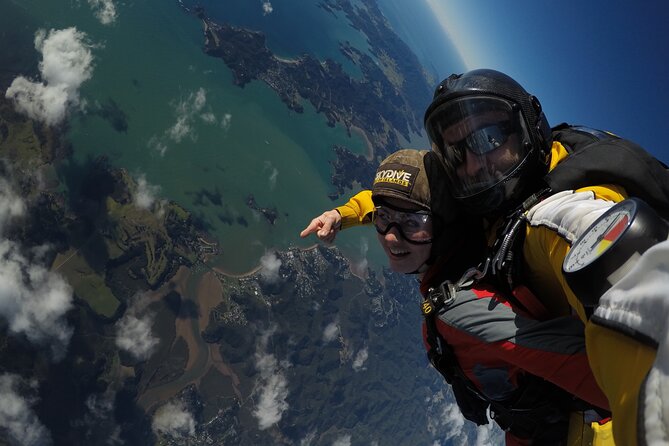
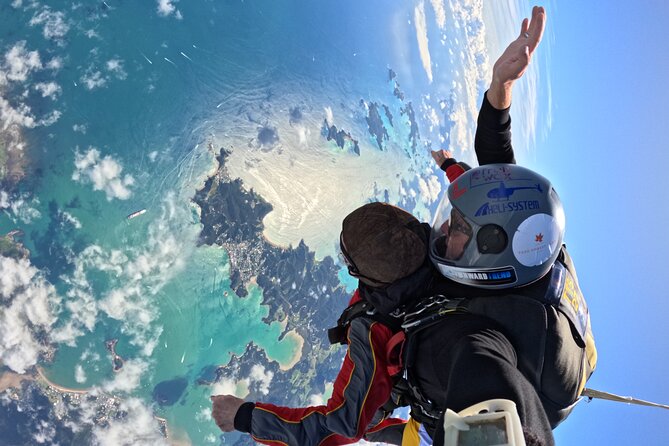
Urupukapuka Island is the largest island in the Bay of Islands and is known for walking tracks, beaches, and clear water. It is one of the more rewarding features to look for from the sky because its size and shape are easier to recognize than those of the smaller islets.
The island’s walking trails offer a slower way to experience the region. The skydive gives you height and speed, while a hike gives you time to notice birds, coves, and shoreline details. If you have several days in the area, combining both makes sense.
Farther out, the Hole in the Rock is a famous natural arch near Cape Brett. It is a striking coastal formation, though its exact visibility from your jump will depend on the route, weather, and viewing angle. You should treat it as a possible sight rather than a guaranteed close-up.
Cape Brett itself is a rugged peninsula with coastal cliffs and wide ocean views. From above, its exposed shape helps show how the Bay of Islands opens toward the Pacific. The area has a wilder feel than Paihia or Russell, and the skydive lets you see that change without taking a long boat trip.
Cape Reinga, at the northern tip of New Zealand, has major spiritual significance and marks the meeting area of the Pacific Ocean and Tasman Sea. It is not directly visible during most skydive jumps, so do not book this activity expecting to see the cape. It belongs in the broader story of Northland rather than the promised view from the aircraft.
Kerikeri and the northern setting
Kerikeri is inland from the main bay and is known for New Zealand’s oldest stone buildings. It is also the location of the drop zone at 182 Wiroa Road. The surrounding greenery and farmland provide a different setting from the open coast.
The town can be a practical base for the activity, especially if you have a car or are staying nearby. If you are based in Paihia, the selected pickup service may be more convenient, but hotel pickup is not included. Read the transport details carefully before booking so you do not arrive at the wrong place.
Kerikeri’s historic character makes it a worthwhile addition to your Northland plans, but it is separate from the skydive itself. You will not be taking a walking tour of the stone buildings during this experience. Plan extra time if you want to visit them on the same day.
Near Matauri Bay, the Rainbow Warrior memorial recalls the Greenpeace ship bombed in Auckland in 1985. It is an important modern memorial, but it is not a guaranteed sight from the jump. Its inclusion in the wider regional view gives you another reason to explore Northland on the ground after your flight.
Cost, photos, and what the $93 covers
At $93, the listed price is attractive for a tandem skydive from 12,000 feet. The price includes the jump, professional guidance, safety equipment, and pickup and drop-off from selected central Paihia and Kerikeri locations. For an activity involving aircraft, specialist equipment, and an experienced instructor, that is a competitive starting price.
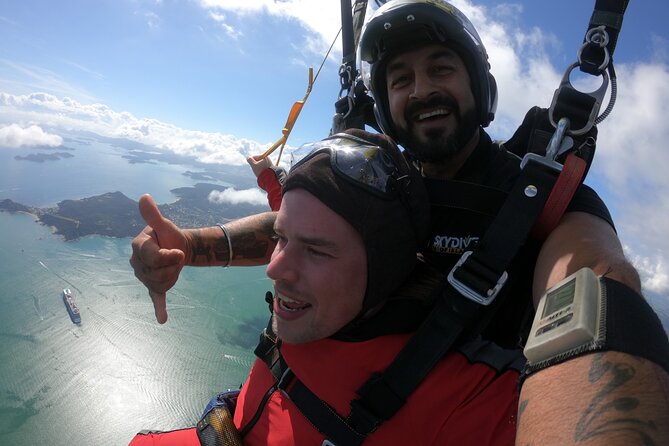
The base amount does not include photos, video, food, or drinks. This matters because media packages are often part of the emotional value of a first skydive. You may remember the event clearly, but photos and video let you share the experience and prove that your face really looked like that in freefall.
The supplied customer feedback highlights two useful options. Higher-altitude jumps are available, and you may be able to book a separate videographer. One customer chose an 18,000-foot jump with supplemental oxygen and a dedicated camera person. That is a different product from the standard 12,000-foot jump, so confirm the upgrade price and availability before you arrive.
You should also budget for transport if you are not in central Paihia or Kerikeri. Food and drinks are not included, and the four-hour time window can stretch around weather delays. A small meal before the activity may be sensible, but avoid arriving uncomfortable in restrictive clothing.
Safety rules and practical preparation
The minimum age is eight. Anyone under 18 needs signed consent from a parent or guardian. The strict maximum weight is 100 kilograms, and you should contact the operator before booking if you think you may be close to that figure.
Wear comfortable clothing and closed-toe shoes. You do not need to bring specialist skydiving equipment because the required safety gear is supplied. A moderate level of physical fitness is expected.
If you have a medical condition that might affect your ability to skydive, seek professional medical advice first. You also cannot skydive within 24 hours of scuba activity because of pressure changes.
Call 0800 GO JUMP one hour before your scheduled time to confirm that conditions are suitable. This is one of the most important instructions in the booking information. The weather can change, and a clear morning does not guarantee a clear jump later in the day.
Printed tickets or vouchers must be presented at the drop zone. Open-dated vouchers need to be booked at least seven days before your requested jump date. If you need to change or cancel, give at least 48 hours’ notice when possible. The formal cancellation policy allows a full refund when you cancel at least 24 hours before the start time, but changes made inside that window are not accepted.
Who will enjoy this jump most
I would recommend this experience to anyone who wants a major adrenaline activity with a strong scenic setting. It suits first-time skydivers because the tandem format lets an experienced instructor manage the technical work while you focus on the sensation and the view.
It also suits couples, families with eligible older children, and anyone marking a special occasion. The group limit of 20 keeps the operation from feeling enormous, though you should still expect some waiting around.
You may want to skip it if you need a tightly timed day. The four-hour allowance is real advice, not a minor footnote. Weather and aviation requirements can shift the schedule, so do not book a ferry, long drive, or other fixed appointment immediately afterward.
It may also be a poor fit if you dislike extra costs after the headline price. The jump is affordable at $93, but photographs, video, transport outside the pickup area, and a higher-altitude upgrade cost more.
Should you book the Bay of Islands skydive?
Book it if you want to see the coast from an extraordinary height and you can keep your schedule flexible. The 12,000-foot jump gives you a serious freefall, a memorable parachute descent, and broad views over one of New Zealand’s most scenic coastal regions.
I especially like the combination of a reasonable starting price, professional instruction, multiple jump times, and selected pickup service. Just confirm your transport, call about conditions one hour before the jump, allow up to four hours, and treat photos and video as optional extras rather than included features.
If you want a calm introduction to the Bay of Islands, take a boat trip instead. If you want a story you will still be telling at dinner, this skydive makes a strong case for itself.
FAQ
Where does the skydive start?
The listed meeting point is 182 Wiroa Road, Kerikeri 0293, New Zealand. The activity ends back at the meeting point.
Is pickup available?
Pickup and drop-off are available from selected central locations in Paihia and Kerikeri. Hotel pickup and drop-off are not included.
How high is the jump?
The standard jump is from 12,000 feet, or about 3,658 meters.
How long is the freefall?
The freefall lasts about 40 seconds.
How long should I allow for the activity?
The skydive usually takes about 1.5 hours, but you should allow two to four hours because of weather changes and unexpected aviation requirements.
What is the minimum age?
The minimum age is eight. Anyone under 18 requires signed consent from a parent or guardian.
Is there a weight limit?
Yes. The strict maximum weight is 100 kilograms. Contact the operator if you think you may be near the limit.
What should I wear?
Wear comfortable clothing and closed-toe shoes. Training and safety equipment are provided.
Are photos and video included?
No. Souvenir photos and video footage are available to purchase separately. A separate videographer may also be available for some higher-altitude jumps.
Can I cancel for a full refund?
You can receive a full refund if you cancel at least 24 hours before the experience start time. Changes made less than 24 hours before the start time are not accepted.
Just added around New Zealand
- Skydive Mt. Cook – 70+ Seconds of Freefall from 16,500ft★ 5.0 · 5 reviews
- Skydive Mt. Cook – 20+ Seconds of Freefall from 10,000ft★ 5.0 · 5 reviews
- Skydive Mt. Cook – 45+ Seconds of Freefall from 13,000ft★ 5.0 · 14 reviews
- Tasman Experience and Skydive | Combo★ 5.0 · 2 reviews
- Bay of Islands: 9000ft Skydive★ 4.5 · 12 reviews
- Tandem Skydive 16,500ft from Franz Josef★ 5.0 · 19 reviews
- Tandem Skydive 10,000ft from Franz Josef★ 5.0 · 4 reviews
- 13,000ft Skydive over Abel Tasman with NZ’s Most Epic Scenery★ 5.0 · 20 reviews
New Zealand Skydiving, compared.

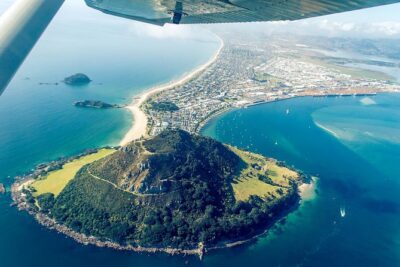
15,000ft Tandem Skydive in Tauranga – Bay of Plenty
Read our review →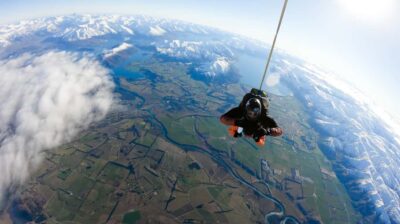
Browse the lists this tour appears in