
Review · NEW ZEALAND
Skydive Mt. Cook – 45+ Seconds of Freefall from 13,000ft
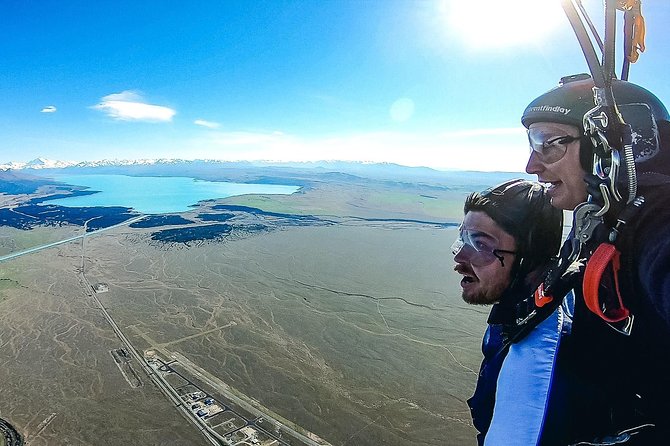
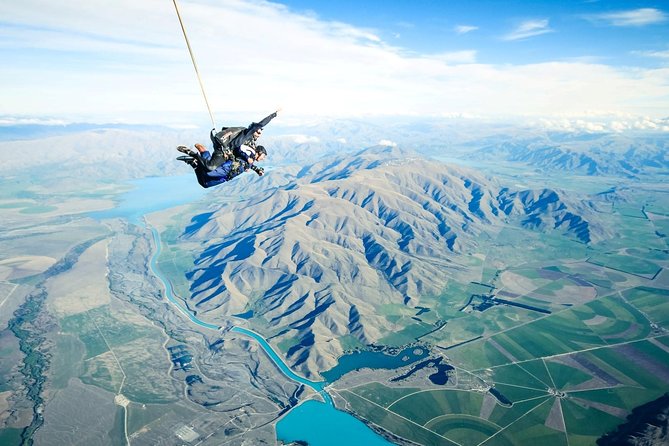
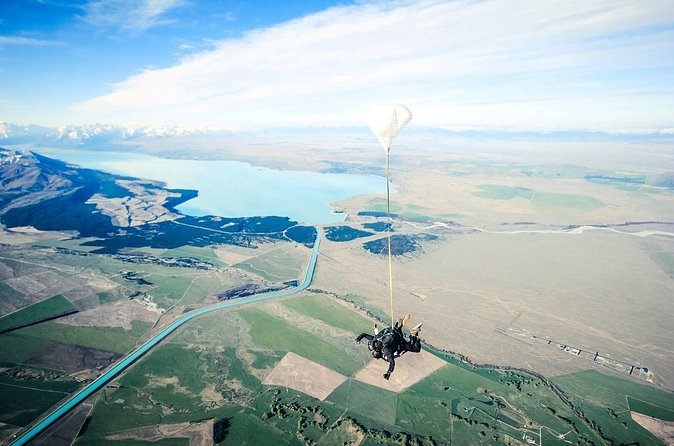
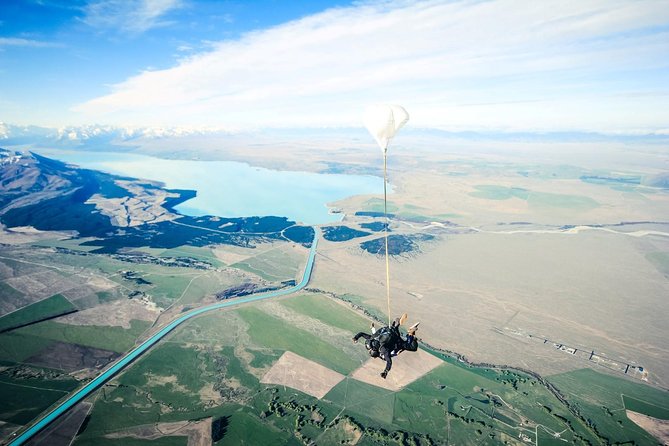
The best view comes after the leap. Skydive Mount Cook gives you more than a thrill ride: from 13,000 feet, you get 45-plus seconds of freefall above snow-covered peaks, glaciers, lakes, and Aoraki/Mt Cook National Park. The setting in Pukaki is the real star, with the Southern Alps spread below you.
I like the serious approach to safety and the small group size, which is capped at nine people. I also like the way the tandem team helps calm nervous jumpers, even when that means postponing the flight for poor weather. The main drawback is the firm cancellation policy, since you cannot get your money back simply because your plans change.
Key points to know before you book
- 13,000-foot jump: You get more than 45 seconds of freefall before the parachute opens.
- Aoraki/Mt Cook views: Snow-capped mountains, glaciers, lakes, and the national park fill the view from above.
- Small group limit: The activity accepts a maximum of nine people, which should make the process feel less crowded.
- Weather matters: Poor conditions can delay or cancel the jump, but you may receive a new date or a full refund.
- Weight rules apply: People from 100 to 115 kilograms may be assessed on the day, with surcharges starting at $40.
- About two hours: The full experience begins and ends at Pukaki Airport, giving you room to fit it into a South Island road trip.
Arriving at Pukaki Airport for the jump
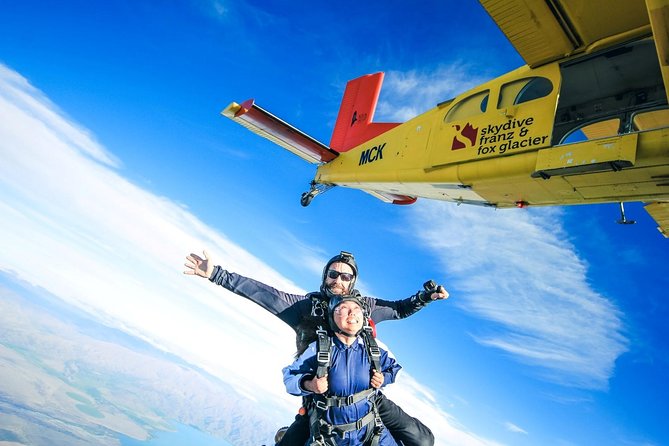
Your meeting point is Skydive Mount Cook, 2 Swallow Drive, at Pukaki Airport near Twizel. This is not a city-center activity. You need to plan your own way to the airport, though the meeting point is near public transportation.
The activity lasts about two hours and returns you to the same place. That makes it fairly easy to fit into a day that includes Twizel, Lake Pukaki, or the Aoraki/Mt Cook area. Still, I would avoid scheduling an important onward connection immediately afterward. Weather can affect the timing, and a tandem jump is not the kind of appointment you want to rush.
Confirmation arrives when you book, and the ticket is mobile, so you can keep the booking on your phone. Bring enough time to check in, prepare, and wait if conditions shift. The small maximum group of nine is useful here. You are not being pushed through a large amusement-park operation with crowds of people.
More High-Altitude Skydives in New Zealand:
- 15,000ft Tandem Skydive in Tauranga – Bay of Plenty
★ 5.0 · 305 reviews - 15,000ft Tandem Skydive in Bay of Plenty
★ 5.0 · 180 reviews - Franz Josef: 13,000ft, 16,500ft or 18,000ft Skydive
★ 4.9 · 113 reviews
What the two-hour schedule is really like
The advertised duration is approximately two hours, but the freefall itself is only one part of the outing. You first need to arrive, complete the required preparation, meet the tandem team, and get ready for the aircraft flight and jump.
The exact timing of each stage is not specified, so you should think of the two-hour figure as an overall visit rather than two hours in the air. That is normal for this type of activity. The important point is that the jump requires more than simply arriving and stepping onto a plane.
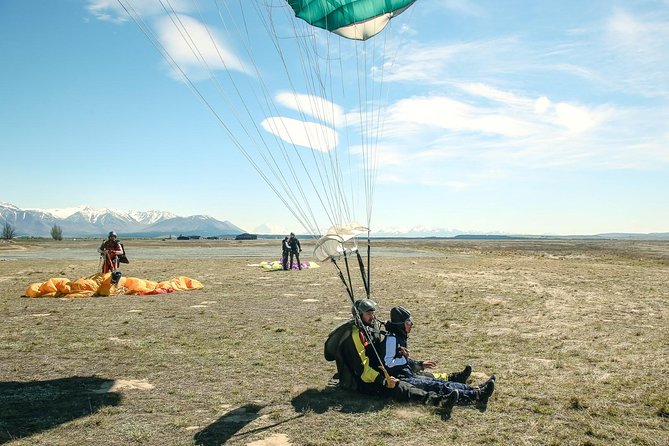
The experience begins and ends at Pukaki Airport. After the jump, you return to the meeting point, which keeps the logistics simple. You do not need to arrange a separate pickup from another town or finish at a different airfield.
For me, the return to the same spot is a practical benefit. You can leave your car there, keep your wider road-trip plan intact, and continue toward your next stop after the activity ends. Allow extra time in your day, though, since weather decisions can change the schedule.
The view from 13,000 feet above Aoraki/Mt Cook
The reason to choose this jump is the view. Pukaki places you among some of the South Island’s most dramatic scenery, and the jump gives you a wide look at it from high above.
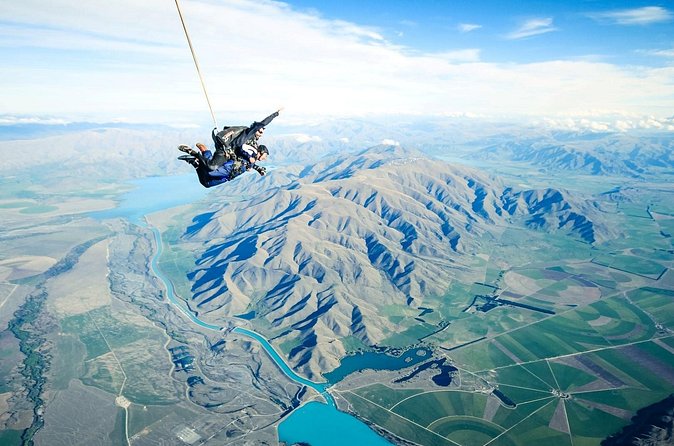
You can expect to see snow-capped mountains, glaciers, lakes, and Aoraki/Mt Cook National Park. From ground level, you see these features one at a time. From the aircraft and during the freefall, they combine into one broad panorama.
The 13,000-foot altitude matters. It gives you more than 45 seconds of freefall, which is a longer sensation than a lower jump. That extra time may appeal to you if you want the full rush of the experience, but it can also feel intense if you are nervous about heights or speed.
The setting also gives this activity a stronger sense of place than a generic jump near a large city. You are not simply paying for an adrenaline hit. You are paying to see one of New Zealand’s best-known mountain regions from an angle you cannot get from a road, trail, or lookout.
A practical note: the views depend on the weather. Clouds, wind, or poor visibility can affect the flight, and the company may delay or postpone the jump rather than send you up in marginal conditions. That is frustrating if your schedule is tight, but it is the right trade-off for both safety and scenery.
A tandem team that takes nervous jumpers seriously
You do not need prior experience to take part. The experience is designed around a tandem jump, with a tandem master responsible for the technical side while you follow the instructions given to you.
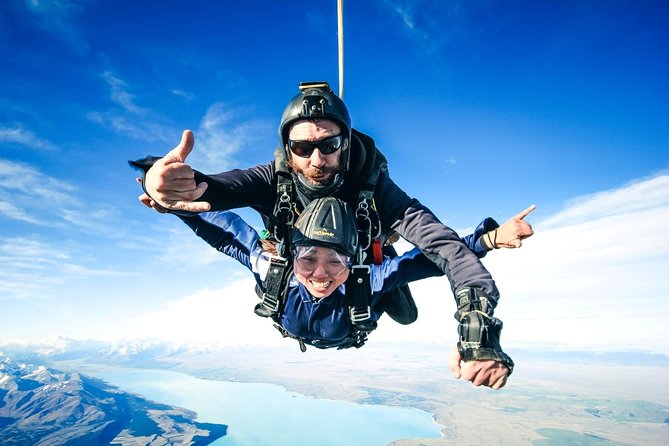
The most praised quality here is the balance between safety and reassurance. The team takes safety seriously, even if that means delaying or postponing a flight. At the same time, the staff work to put nervous jumpers at ease from the start of the process through the jump itself.
That combination matters. Some adventure operators focus so heavily on excitement that nervous customers feel like an inconvenience. This team appears to understand that fear is part of the experience. You can be excited and worried at the same time, and the staff are prepared for that.
I would still be honest with yourself before booking. You will not be able to turn the experience into a gentle scenic flight once you are committed to the jump. The team can support you, but the decision to take part should be yours.
Most people can participate, according to the supplied activity information. Service animals are allowed, and the meeting area is near public transportation. Those details may help with planning, though you should still check your own transport needs before setting the date.
More Skydives in New Zealand:
- Skydive Auckland
★ 5.0 · 1,516 reviews - NZONE Skydive Queenstown
★ 4.5 · 1,438 reviews - Queenstown: Tandem Skydive Experience
★ 4.8 · 475 reviews - Lake Taupo 12,000-Foot Tandem Skydiving
★ 5.0 · 359 reviews
Weight limits and the extra cost above 100 kilograms
Weight rules are important here, so check them before you pay. There is a weight limit, and people weighing between 100 and 115 kilograms may be able to jump after an assessment by a tandem master and a harness fitting on the day.
The additional charges are:
- $40 for people weighing 100 to 110 kilograms
- $60 for people weighing 111 to 115 kilograms
Anyone at 100 kilograms or above is subject to a surcharge. Approval is not automatic in the 100 to 115 kilogram range, since the team must assess the fit and conditions on the day.
This is one of the few areas where the advertised price may not be your final price. If you are close to the threshold, contact the operator before booking so you understand the likely cost and the possibility that the jump may not be approved.
Is $266.23 good value for this experience?
The listed price is $266.23 per person. That is a serious amount of money, but the value depends on what you want from your South Island trip.
You are paying for a high-altitude tandem jump, more than 45 seconds of freefall, and a view over mountains, glaciers, lakes, and Aoraki/Mt Cook National Park. The setting gives the experience a clear reason to cost more than a basic recreational jump in a less dramatic location.
I see the value most clearly for a special trip, a milestone, or a visitor who wants one major adventure rather than several small paid attractions. If you already plan to spend time around Pukaki and Aoraki/Mt Cook, the activity also fits naturally into your route.
The value is weaker if you are mainly looking for a cheap view of the mountains. You can see plenty of South Island scenery from roads and public viewpoints without paying this amount. The price makes sense only if you want the flight, the freefall, and the personal challenge as much as the view.
Remember to allow for the possible weight surcharge. Also remember that the booking is non-refundable and cannot be changed for personal reasons. That makes the purchase less flexible than many ordinary sightseeing activities.
Weather can decide your day
Good weather is required. If poor conditions cancel the activity, you are offered another date or a full refund. That policy protects you from losing the entire payment when the weather makes the jump unsafe.
The trade-off is that you need some flexibility in your itinerary. If you are passing through Pukaki for only one morning, a weather cancellation may leave no room for another attempt. If possible, schedule the jump early enough in your South Island trip to allow for a new date.
The team’s willingness to postpone a flight is one of the strongest signs that safety is not treated as a side issue. You may be disappointed if the aircraft does not go up, but a delay is better than forcing a jump in poor conditions.
The activity requires good weather for both safety and the view. Even if a flight were technically possible in less-than-perfect conditions, clouds could hide the very mountains you paid to see.
Who will enjoy this most?
This experience suits you if you want a major burst of adrenaline paired with some of New Zealand’s finest mountain scenery. It is also a good choice if you are nervous but still want to try a tandem jump with a team that gives safety and reassurance real attention.
It fits especially well for:
- Adventurous adults planning time around Pukaki or Twizel
- Visitors who want a memorable Aoraki/Mt Cook experience
- People who value a small group rather than a large commercial operation
- Nervous first-timers who want calm support from the tandem team
- Anyone willing to keep a little flexibility for weather changes
It may not suit you if you need a fixed schedule, cannot risk a non-refundable booking, or mainly want a quiet scenic activity. It is also a poor fit if you are close to the weight limit and cannot accept the possibility of an on-the-day assessment or surcharge.
The supplied information says most people can participate, but it does not provide a full medical eligibility list. If you have a health concern, ask the operator before booking rather than relying on a general statement.
Booking timing and planning around your road trip
The activity is booked, on average, about 29 days in advance. That suggests you should reserve ahead, especially if your travel dates are fixed or your South Island route includes only one possible day in Pukaki.
Do not treat this as a last-minute stop you can add whenever the weather looks good. The non-refundable rule makes timing important. Check your wider itinerary first, then choose a date that gives you room to respond to a cancellation.
A small group limit of nine may help keep demand manageable, but it does not guarantee space on your preferred day. I would book earlier if you are traveling during a busy period or have a special date in mind.
Keep your day simple. Avoid placing a long drive, a major hike, or an important connection immediately after the jump. The activity takes about two hours under normal planning, but a weather delay can affect that estimate.
My practical verdict on the experience
I like this activity because the scenery gives the jump a strong sense of place. The freefall is the main physical thrill, but the snow-capped peaks, glaciers, lakes, and national park below make it feel specific to the South Island rather than interchangeable with an airfield anywhere else.
I also give the operation credit for taking safety seriously. Delaying a flight may inconvenience you, but it is a good sign when the team will postpone rather than push ahead in poor conditions. The calm treatment of nervous jumpers is another major strength.
The weaknesses are clear. The price is high, the booking cannot be changed or refunded for personal reasons, and the weather may disrupt your plans. Weight restrictions and surcharges add another practical concern for some people.
Should you book Skydive Mount Cook?
Book it if you want one bold, memorable activity in the Aoraki/Mt Cook region and can keep your schedule flexible. The 13,000-foot jump, 45-plus seconds of freefall, and mountain views offer a strong reason to choose this experience over a standard scenic flight.
Skip it if you need a guaranteed timetable, dislike heights, or want a low-cost way to see the area. Before paying, check the weather outlook, your weight category, your transport to Pukaki Airport, and your ability to accept a non-refundable booking.
For the right person, this is not just a jump. It is a costly but distinctive way to see New Zealand’s high country from above, with a team that appears to balance excitement with care.
FAQ
Where does the Skydive Mount Cook experience begin?
It begins at Skydive Mount Cook, 2 Swallow Drive, Pukaki Airport, Pukaki, Twizel 7999, New Zealand.
Where does the activity end?
The activity ends back at the meeting point at Pukaki Airport.
How long does the experience take?
The total activity lasts approximately two hours.
How high is the jump?
The jump takes place from 13,000 feet and includes more than 45 seconds of freefall.
What scenery can I see during the jump?
The views include snow-capped mountains, glaciers, lakes, and Aoraki/Mt Cook National Park.
Is there a weight limit?
Yes. People weighing between 100 and 115 kilograms may be able to jump after a tandem master assesses them and checks the harness fit on the day. People weighing 100 kilograms or more pay a surcharge.
What happens if bad weather cancels the activity?
You are offered another date or a full refund if poor weather causes the cancellation.
Just added around New Zealand
- Skydive Mt. Cook – 70+ Seconds of Freefall from 16,500ft★ 5.0 · 5 reviews
- Skydive Mt. Cook – 20+ Seconds of Freefall from 10,000ft★ 5.0 · 5 reviews
- Tasman Experience and Skydive | Combo★ 5.0 · 2 reviews
- Bay of Islands: 9000ft Skydive★ 4.5 · 12 reviews
- Tandem Skydive 13,000ft from Franz Josef★ 4.5 · 16 reviews
- Tandem Skydive 16,500ft from Franz Josef★ 5.0 · 19 reviews
- Tandem Skydive 10,000ft from Franz Josef★ 5.0 · 4 reviews
- 13,000ft Skydive over Abel Tasman with NZ’s Most Epic Scenery★ 5.0 · 20 reviews
High-Altitude Skydives, compared.
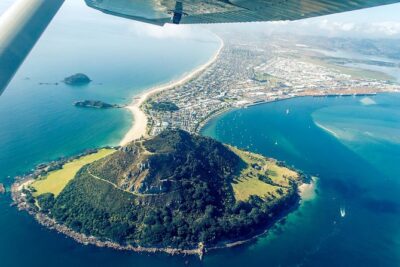
15,000ft Tandem Skydive in Tauranga – Bay of Plenty
Read our review →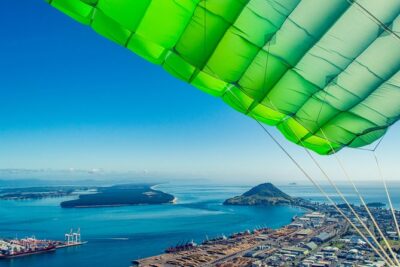
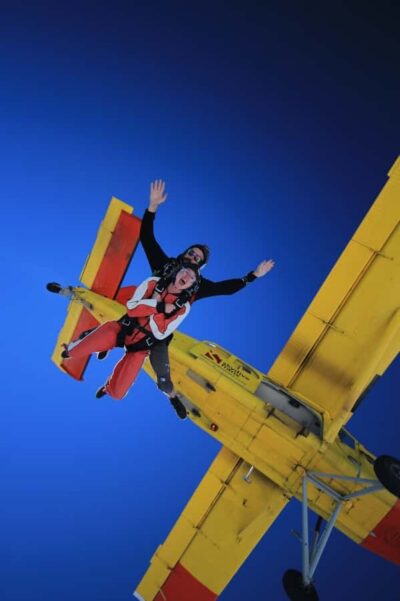
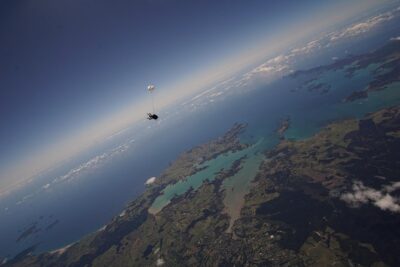
Skydive Fiji Legend 13000ft Tandem Jump (60 seconds free fall)
Read our review →Browse the lists this tour appears in