
Review · QUEENSTOWN
Queenstown: Tandem Skydive Experience
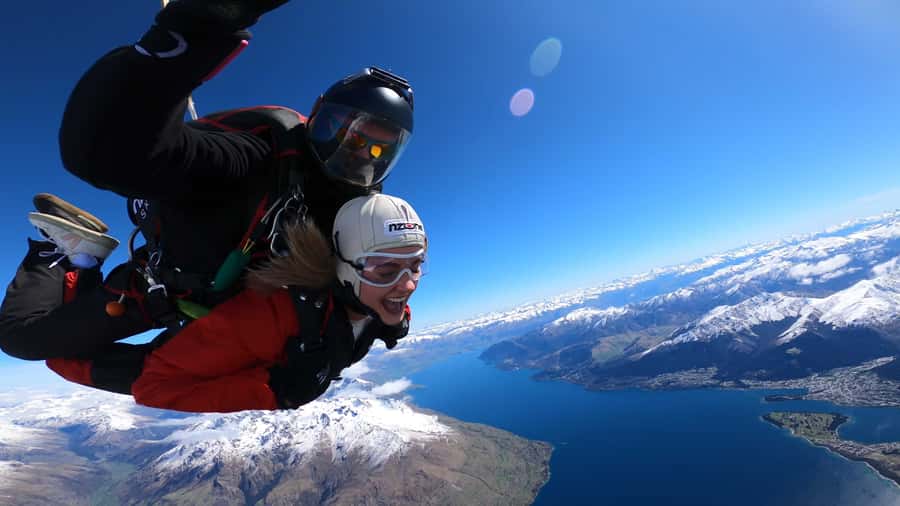
Queenstown makes a dramatic jump site. From the aircraft, you look across Lake Wakatipu, the Southern Lakes, and snow-capped peaks before dropping at speeds of up to 200 kph. I like the mix of a scenic flight and serious adrenaline, plus the calm five-minute parachute ride afterward. The main drawback is cost: the $214 price does not include photos or video, and those add-ons can feel expensive.
I also like how the experience works for nervous first-timers. Your tandem master handles the technical side, explains each stage, and keeps checking that you are comfortable. Guides such as Chris, Tim, Tain, Luke, and Sotero have earned especially warm praise for helping people relax. Still, weather can cancel or delay the jump, so do not place it on the final morning of a short Queenstown visit.
Key points at a glance
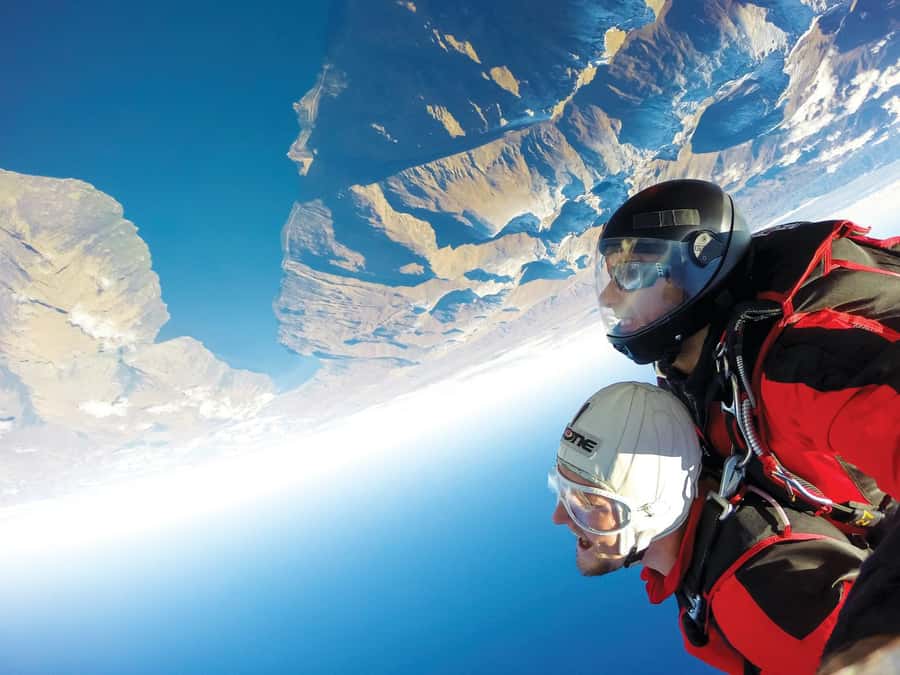
- Three jump heights: Choose 9,000, 12,000, or 15,000 feet, with the highest option offering up to 60 seconds of freefall.
- Big Southern Lakes scenery: You look over Lake Wakatipu, the Wakatipu Basin, Queenstown, and snow-covered mountains from the aircraft and parachute.
- About three to four hours: The time includes central Queenstown check-in, transport, preparation, the flight, the jump, and your return.
- Strong support for beginners: Tandem masters provide the instruction and manage the equipment, while safety checks take place before the aircraft leaves.
- Photos and video cost extra: The camera packages are popular, but several people considered them pricey, so budget for them separately.
- Weather matters: Poor conditions can cancel the activity, sometimes more than once in one day, so leave room to reschedule.
Why Queenstown is such a good place for a first jump
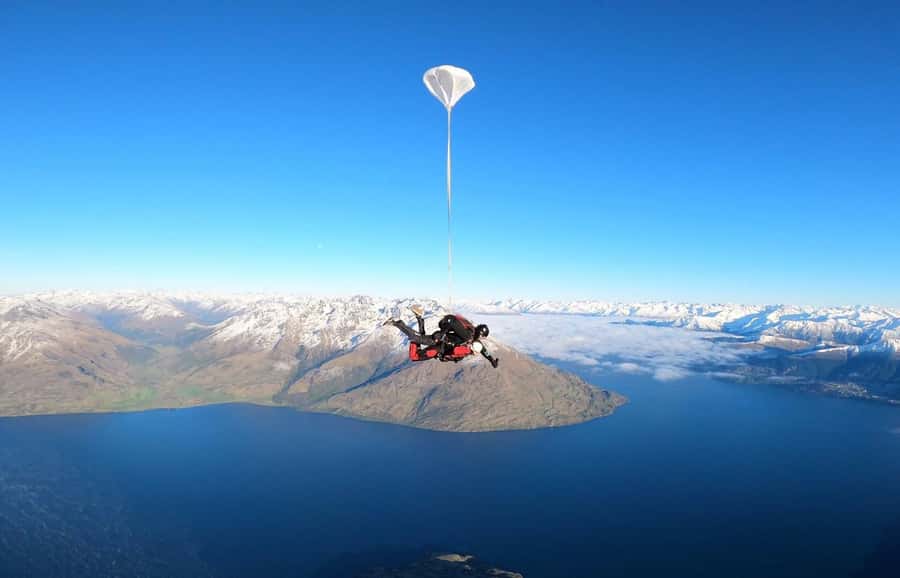
Queenstown is not just a convenient launch point. It gives the jump a sense of place. You are not falling over a featureless patch of ground. You are above Lake Wakatipu and the Southern Lakes, with mountain ridges and snow-covered summits filling the view.
That scenery matters most during the aircraft ride and the parachute section. Freefall is fast and sensory-heavy. At up to 200 kph, you have little time to study anything. Under canopy, the experience slows down, giving you roughly five minutes to look around and absorb the Wakatipu Basin.
I would choose this experience for someone who wants more than a quick stunt. The jump is the main event, but the scenic flight adds real value. Even before the aircraft door opens, you are already seeing the area from a viewpoint that a normal Queenstown bus or boat trip cannot match.
The location also helps with the nerves. Several first-time jumpers found that the views distracted them from the fear. That will not happen for everyone, but the setting gives you something beautiful to focus on during the climb.
More Tandem Skydives in New Zealand:
- Lake Taupo 12,000-Foot Tandem Skydiving
★ 5.0 · 359 reviews - Tandem Skydive Experience in Taupo
★ 5.0 · 324 reviews - 15,000ft Tandem Skydive in Tauranga – Bay of Plenty
★ 5.0 · 305 reviews
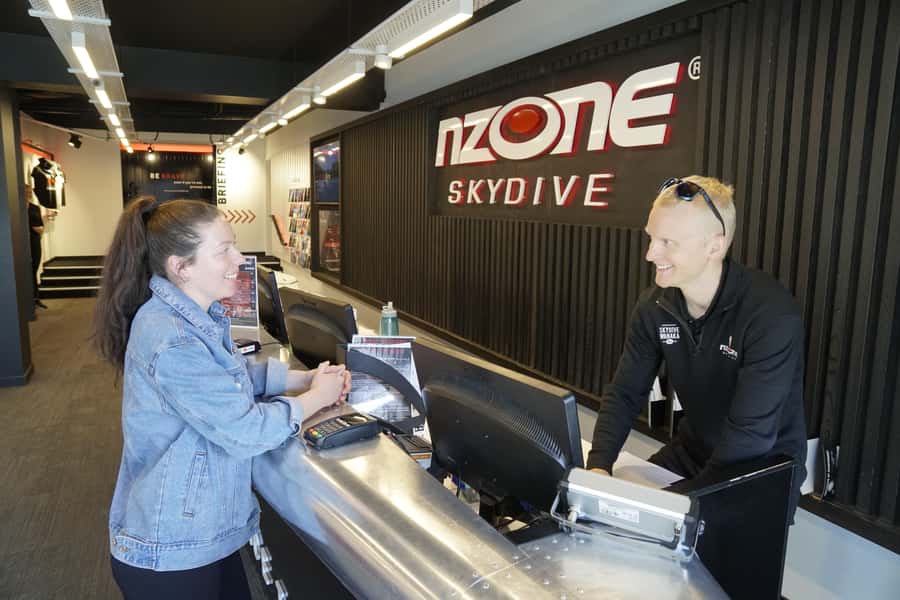
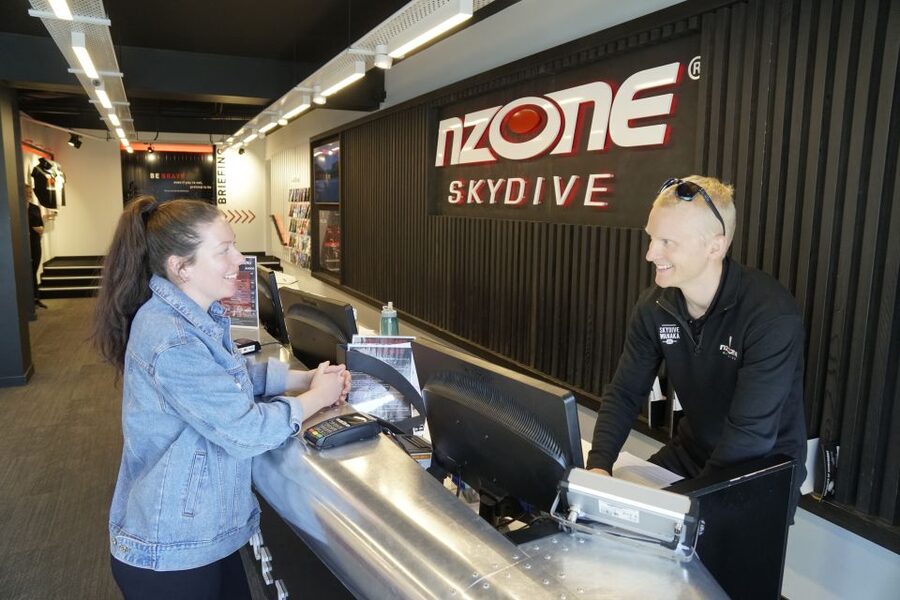
Check-in at 35 Shotover Street
The experience begins at 35 Shotover Street in central Queenstown. This is a useful meeting point because you can reach it from the town center without arranging a separate trip to the drop zone.
Allow three to four hours from check-in to your return. That estimate includes transport, equipment, safety instructions, waiting time, the aircraft ride, and the jump itself. The schedule can move around if weather affects earlier departures, so avoid booking a tight restaurant reservation or another paid activity immediately afterward.
The transport is one of the practical strengths here. You check in centrally, then return by the free transfer after the jump. One person reported receiving a photo and video link while still on the ride back, which gives you an idea of how quickly the operation can process media.
Check-in may feel busy at popular times. That is not a reason to avoid the experience, but you should arrive ready rather than rushing in at the last second. Wear closed-toe shoes and leave cameras at home. Personal cameras are not allowed, including during the jump.
The drop zone: preparation without too much fuss
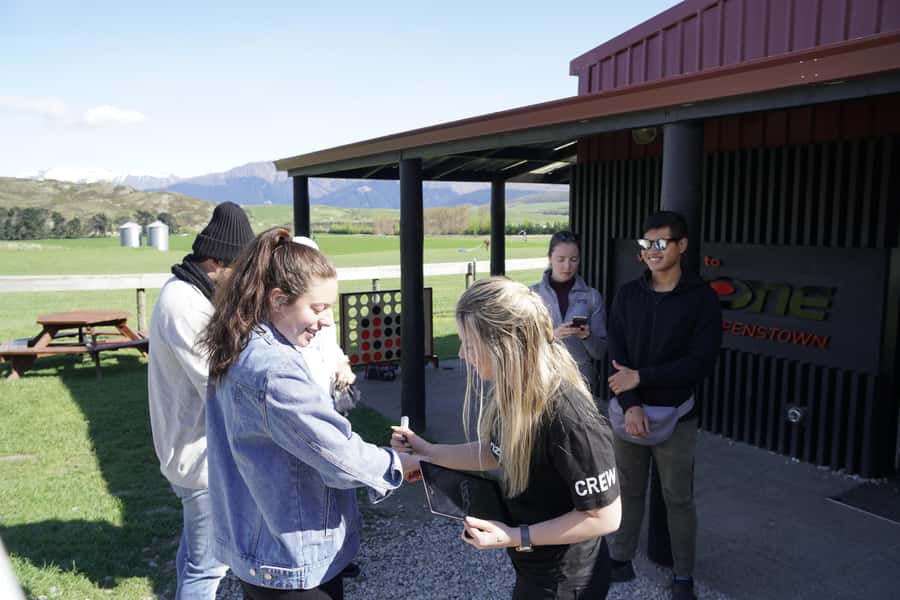
At the base, you can watch parachutes being packed and see other people getting ready. This is useful for a first-timer because it turns an abstract fear into a series of visible steps. You can see the equipment, meet the team, and watch the process before your own name is called.
You receive the required gear, including a jumpsuit, frap hat, goggles, harness, and other safety equipment. Lockers are available for valuables. The base also has Wi-Fi, internet kiosks, outdoor games, drinks, snacks, and souvenir clothing.
Those extras will not make or break the jump, but they help fill the waiting period. Delays are possible, especially after poor weather. Having somewhere to sit, get a drink, or watch the preparation is better than standing around with nothing to do.
Your tandem master also assesses you at the drop zone. This is an important point: meeting the minimum age and weight rules does not automatically guarantee participation. The final decision includes the tandem master’s assessment and the prevailing conditions.
Instruction is available in English and Chinese. The strongest part of the operation, judging by the individual experiences provided, is the personal support. First-time jumpers repeatedly described their guides as calm, friendly, and clear. That matters far more than a polished waiting room.
Choosing 9,000, 12,000, or 15,000 feet
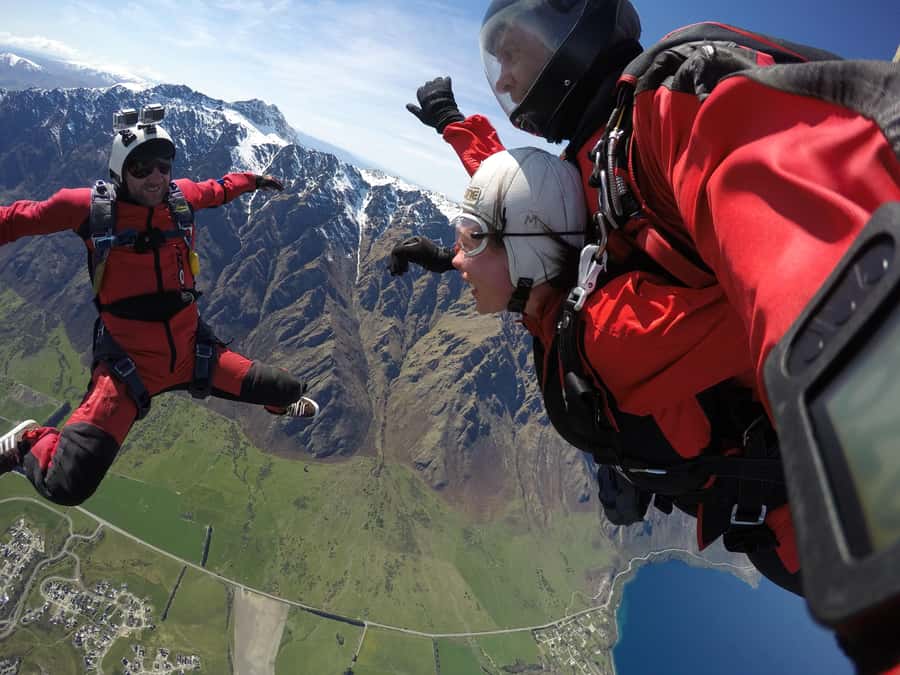
The three height choices are not just different price points. They change how long you remain in freefall.
The 9,000-foot option includes a 30-second freefall. The 12,000-foot option gives you more time, while the 15,000-foot jump offers up to 60 seconds. All three include a five-minute parachute flight once the canopy is open.
If this is a once-only experience, I would look hard at 12,000 or 15,000 feet. Several people who chose the higher option felt the additional freefall was worth it. One first-time jumper specifically advised choosing 12,000 or 15,000 feet, saying that the extra height did not make the initial leap feel more frightening.
The 9,000-foot jump still gives you the full basic experience: plane ascent, freefall, parachute flight, and mountain scenery. It makes sense if your budget is tight or if you are unsure how much time you want in freefall.
The 15,000-foot option is the clearest choice for someone who wants maximum time in the air. It also gives you more time to settle into the sensation before the parachute phase. The jump will still be intense, but the extra seconds are the part you cannot recreate later.
Check the current price for your chosen height before booking. The supplied price of $214 per person may apply to the advertised experience rather than every possible upgrade or package.
More Skydives in New Zealand:
- Skydive Auckland
★ 5.0 · 1,516 reviews - NZONE Skydive Queenstown
★ 4.5 · 1,438 reviews - Bay of Islands: 12,000ft Skydive
★ 5.0 · 253 reviews - Wanaka: Tandem Skydive Experience
★ 4.8 · 252 reviews
The aircraft ride and the moment at the door
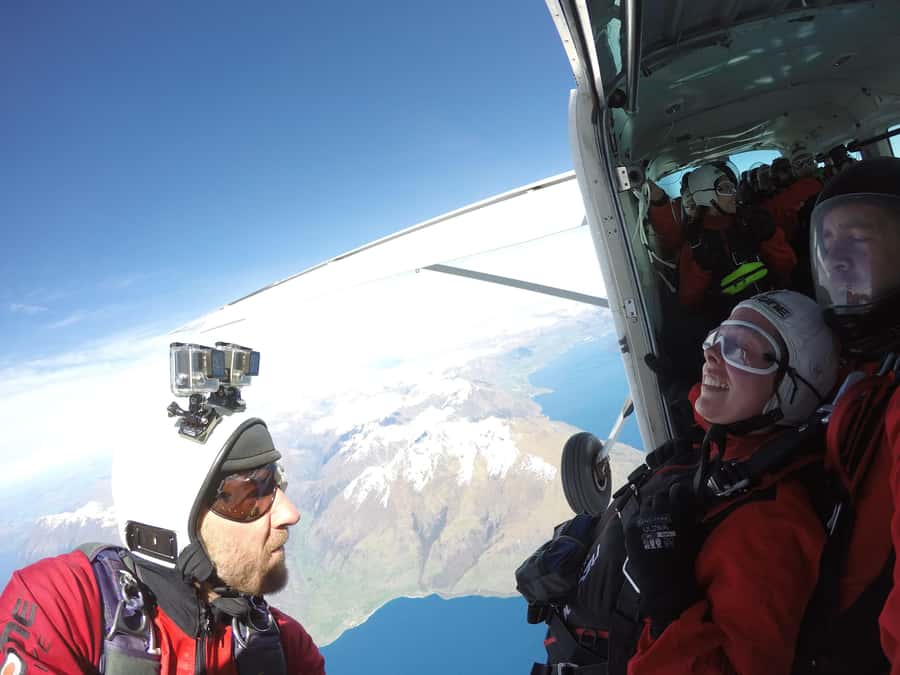
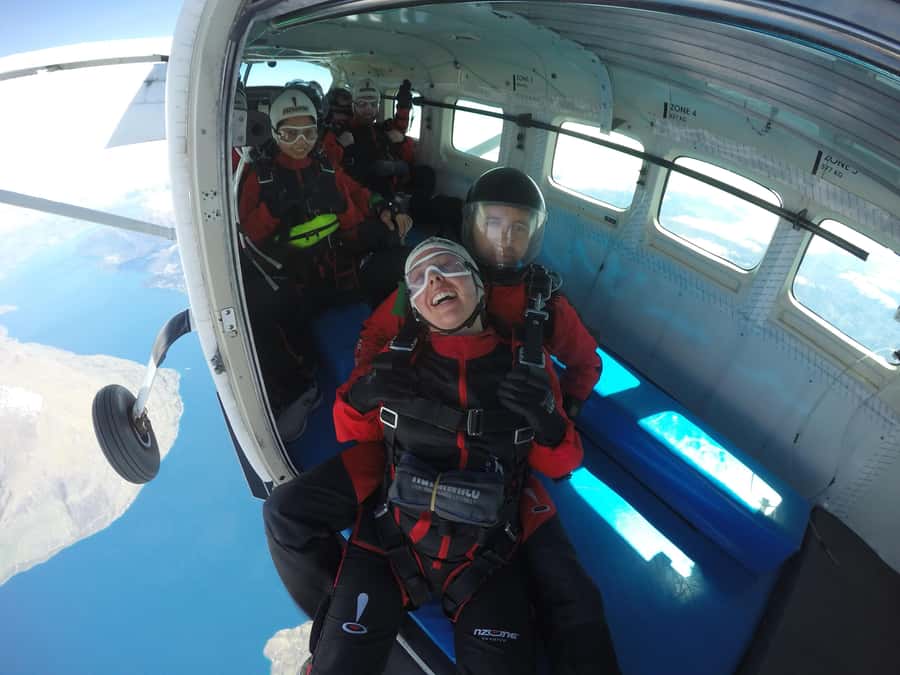
The scenic flight lasts about 15 minutes and is part of the value of the experience. As the aircraft climbs, you get a broad view of Queenstown and the surrounding mountains. The flight gives you a gradual transition from ordinary sightseeing to the jump itself.
Then the mood changes quickly. You are harnessed to your tandem master, wearing goggles and the required clothing, and positioned for the exit. Your guide directs your body position and timing. You do not need to work out the technical details while standing at the aircraft door.
That is where a calm tandem master makes a real difference. Chris helped one nervous first-timer feel safe and relaxed. Tain was praised for making another person feel secure from the start. Tim was singled out for helping a frightened jumper enjoy the experience, while guides such as Luke, Gabriel, Sam, and Sotero also received strong praise for clear support.
These names are useful for understanding the kind of help you can expect, but you may be paired with someone else. The important point is the role itself: your tandem master manages the jump, communicates the next step, and controls the equipment.
Freefall at 200 kph
Freefall lasts 30 to 60 seconds, depending on the height you choose. That can sound short on paper, but at 200 kph it is a powerful burst of noise, wind, movement, and open space.
You will not calmly admire every mountain during the first seconds. Keep your expectations realistic. The most detailed views often come during the aircraft ride and canopy flight, while freefall gives you the raw thrill.
Your guide will help you keep the correct position. Try to listen to the instructions before the exit and follow them as simply as possible. The less you worry about doing everything perfectly, the more attention you can give to the moment.
Some first-time jumpers expected fear to dominate but found the views took over. Others were visibly nervous until their tandem master reassured them. Both reactions are normal. You do not need to be fearless to enjoy this. You need to accept that your guide is handling the technical work and that the sensation will be intense.
Five minutes under canopy above the Wakatipu Basin
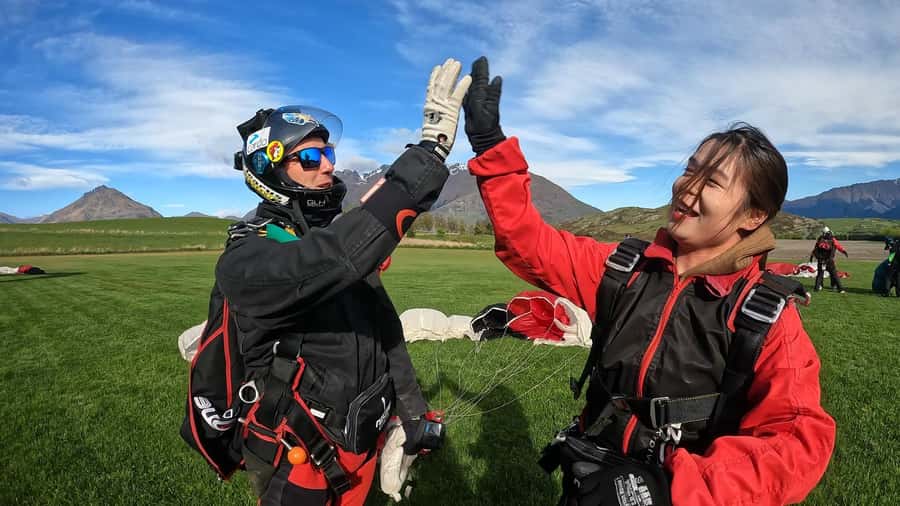
Once the parachute opens, the experience changes from a rush to a slow aerial ride. The canopy phase lasts about five minutes, with views across the Wakatipu Basin and Lake Wakatipu.
This is the section where you can actually look. You may be able to point out the lake, mountains, and Queenstown area without the wind and speed of freefall taking over. For many people, it provides the emotional payoff after the initial shock.
The landing is described as taking place on grass, although the exact feel depends on conditions and the instructions from your tandem master. Your guide controls the approach and landing, so your job is to listen and follow directions.
The parachute phase also makes the experience more than a single dramatic exit. You get a scenic flight up, a high-speed fall, and a quieter return to the ground. That three-part rhythm is one reason the activity feels substantial despite the jump itself lasting less than a minute.
Is $214 good value?
At $214 per person, this is a major activity purchase, especially if two people are booking together. The price covers the tandem skydive, tandem master, safety gear, freefall, canopy flight, scenic aircraft time, central transport, and access to the base facilities.
I think the value is strongest if you choose a higher jump height and treat the experience as one of your main Queenstown activities. You are paying for a full half-day commitment, not just a few seconds at the aircraft door.
The photo and video package is not included. This is the main extra cost to watch. Several people loved having the footage, while others called it expensive. One person was very happy with the result, but noted that the camera work between two tandem masters was not equally strong. Another had a delay with a purchased photo package.
My advice is simple: decide before the day if you want a permanent record, then ask exactly what is included and when you will receive it. If the package stretches your budget, skip it. The scenery and the experience do not depend on buying the media.
Safety, weather, and the limits you need to know
Parachuting carries real risk. The operator’s warning covers possible problems during the aircraft flight, descent, landing, and parachute deployment. You participate at your own risk, even though the activity includes safety equipment, trained tandem masters, and checks at the drop zone.
The weather is a practical concern, not a minor footnote. One booking was cancelled twice in the same day because of conditions. Another person had a Sunday booking cancelled, then rearranged it without trouble. A separate delay occurred after earlier weather cancellations created a backlog.
Book this early in your Queenstown stay if possible. That gives you a chance to move the activity to another day. Free cancellation is available up to 24 hours beforehand for a full refund, and you can reserve now and pay later, which helps if your plans are still moving.
The minimum age is six, the minimum weight is 40 kilograms, and the maximum weight is 115 kilograms. The experience is not suitable for pregnant women, children below six, or anyone outside those weight limits. All participants remain subject to the tandem master’s assessment.
Who will enjoy this most?
This suits a first-time jumper who wants strong scenery and plenty of guidance. You do not need previous experience, and the tandem format lets you focus on the feeling rather than operating the parachute.
It also works well for couples, friends, and families with eligible older children. One person booked for herself and her daughter, and both had a good time. If you are booking for someone else, make sure they understand the risk warning and meet the weight and age requirements.
I would be more cautious if you have only one free morning in Queenstown. Weather can interfere, and the full experience takes three to four hours. It is also not ideal for anyone who dislikes paying extra for photos after already making a large purchase.
Should you book the Queenstown tandem skydive?
Book it if you want a major Queenstown memory, can handle the cost, and have enough time to allow for weather changes. The mountain and lake views give this more character than a jump over an ordinary airfield, and the support from tandem masters appears to be a major strength.
Choose 12,000 or 15,000 feet if you want the most freefall for your money. Choose 9,000 feet if the lower cost matters more or if you want the shortest version of the experience.
I would book early in the itinerary, wear closed-toe shoes, leave cameras behind, and decide about the media package before check-in. For a first jump above the Southern Lakes, this is a strong choice, provided you accept the risks and keep your schedule flexible.
FAQ
Where does the Queenstown tandem skydive meet?
The meeting point is 35 Shotover Street in Queenstown, New Zealand.
How long does the experience take?
Allow three to four hours in total. This includes check-in, transport, preparation, the aircraft ride, the jump, and the return.
How high can I jump from?
You can choose a jump from 9,000, 12,000, or 15,000 feet.
How long is the freefall?
Freefall lasts between 30 and 60 seconds, depending on the jump height selected.
How long is the parachute ride?
The canopy flight lasts about five minutes above the Wakatipu Basin.
Is transport included?
Yes. Return transfers to Queenstown are included.
Are photos and video included?
No. Photo and video packages are available separately and are not included in the listed price.
What should I bring?
Bring closed-toe shoes. Open-toed shoes and personal cameras are not allowed.
Just added around New Zealand
- Skydive Mt. Cook – 70+ Seconds of Freefall from 16,500ft★ 5.0 · 5 reviews
- Skydive Mt. Cook – 20+ Seconds of Freefall from 10,000ft★ 5.0 · 5 reviews
- Skydive Mt. Cook – 45+ Seconds of Freefall from 13,000ft★ 5.0 · 14 reviews
- Tasman Experience and Skydive | Combo★ 5.0 · 2 reviews
- Bay of Islands: 9000ft Skydive★ 4.5 · 12 reviews
- 10,000ft Skydive over Abel Tasman with NZ’s Most Epic Scenery★ 5.0 · 10 reviews
- Queenstown: Ticket for 2 Indoor Skydiving Flights★ 4.4 · 15 reviews
- Tandem Skydive 13,000ft from Franz Josef★ 4.5 · 16 reviews
Tandem Skydives, compared.
Tandem Skydiving Experience with Beach Landing
Read our review →
15,000ft Tandem Skydive in Tauranga – Bay of Plenty
Read our review →Browse the lists this tour appears in