
Review · MELBOURNE
Melbourne: Tandem Skydive Experience over St. Kilda Beach
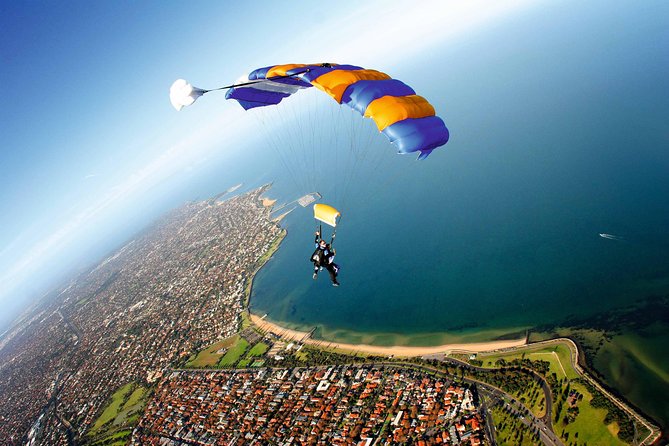
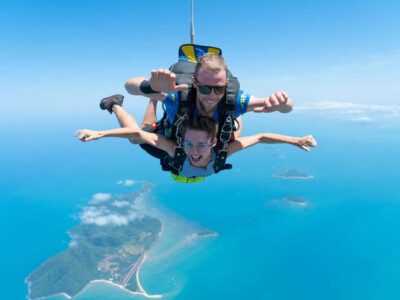
The coastline looks very different from 15,000 feet. This tandem parachute jump gives you a rare view of Melbourne, St Kilda, and Port Phillip Bay before a freefall of up to 60 seconds and a slower five to seven-minute descent under canopy. I like the beach setting and the fact that you are attached to a trained tandem instructor throughout the jump. I also like the clear structure: safety briefing, scenic flight, freefall, then a calm ride back to earth.
The main drawback is time uncertainty. Although the activity is advertised as about four hours, poor weather or operational delays can stretch the day considerably. One reported delay lasted seven hours, so I would not schedule an important event soon afterward. Photos and video also cost an additional A$179 per person, which pushes up the final price.
Key points before you book
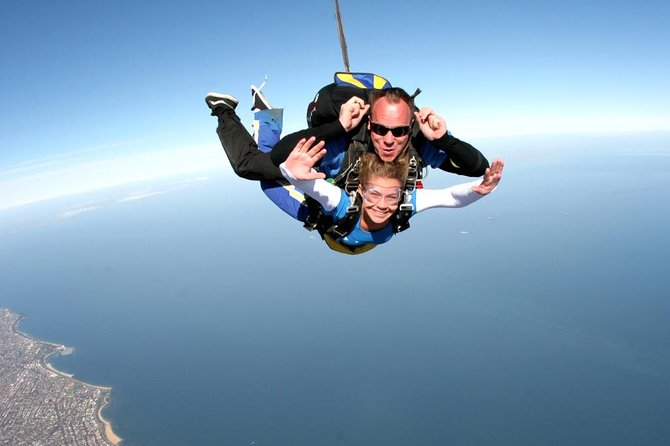
- A rare Melbourne coastline jump: The route gives you aerial views of St Kilda Beach, Melbourne, and Port Phillip Bay.
- Up to 15,000 feet: The advertised jump height reaches 15,000 feet, while the tour summary also refers to 14,000 feet.
- Up to 60 seconds of freefall: You may reach speeds of about 220 km/h before the parachute opens.
- A professional tandem instructor stays attached: Your instructor handles the technical parts and guides you through the jump.
- Allow about four hours, but keep your day flexible: Weather and airport operations can create long delays.
- Media costs extra: Photo and video packages are available at the drop zone for A$179 per person.
From St Kilda to Moorabbin Airport
The stated meeting point is M.O. Moran Reserve in St Kilda, Victoria. The actual jump begins at Moorabbin Airport, and the activity finishes back at the meeting point. Pickup is offered, but confirm the pickup location and time one or two days before you go, especially if you are relying on transport rather than making your own way there.
This meeting arrangement matters because the beach is the visual setting, not the aircraft departure point. You are not simply walking onto the sand and jumping over the water. The airport provides the aircraft and operating base, while the coastal route supplies the views that make this jump different from a standard inland parachute experience.
The activity lasts about four hours in normal conditions. That includes arrival, paperwork and preparation, the briefing, the aircraft ride, the jump, and the return to the meeting point. Your actual freefall is brief. The day is built around waiting, preparation, and the flight as much as the few intense minutes in the air.
I would keep the rest of your schedule light. A reported seven-hour delay shows why this is not a good choice before a dinner reservation, airport transfer, or timed attraction. Weather can stop parachute operations, and the final decision belongs to the operator.
More Beach Skydives in Australia:
- Airlie Beach: Tandem Skydive over the Whitsundays
★ 4.8 · 726 reviews - Airlie Beach: Tandem Skydiving Experience with Beach Landing
★ 4.9 · 382 reviews - Airlie Beach Tandem Skydive Over the Whitsunday Islands
★ 4.5 · 255 reviews
The safety briefing and preparation
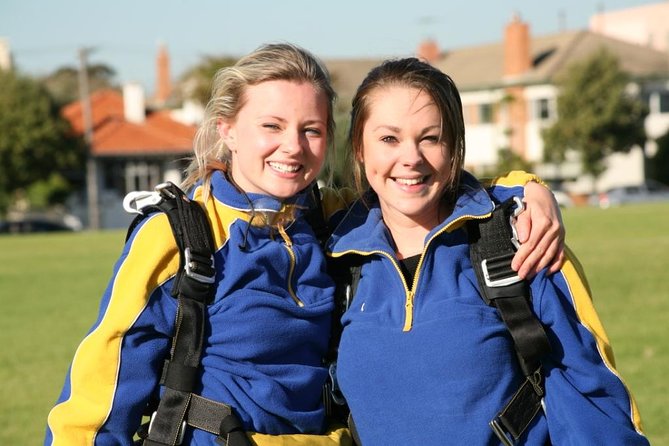
Your session begins with a safety briefing from the parachute team. This is where you learn how to position your body, respond to instructions, and prepare for landing. You do not need to manage the parachute system on your own, but you do need to listen closely and follow the instructor’s directions.
You are paired with a qualified tandem master for the aircraft ride, freefall, parachute descent, and landing. The instructor is responsible for the main technical tasks, including deploying and steering the parachute. If you feel capable during the canopy portion, you may be allowed to take control and steer for a while.
That arrangement helps first-time jumpers. Several instructors have been praised by name, including Simon, Cleave, and Lucas. Simon was especially good at helping nervous participants settle down, while Cleave used conversation and humor to distract one anxious jumper before the aircraft ride. Those details matter because fear is often the biggest barrier, not the physical effort.
Still, a tandem setup is not a promise that the activity feels easy. You are agreeing to an inherently risky sport. The supplied safety warning notes possible risks during the aircraft flight, descent, and landing, along with the possibility of a parachute opening abruptly or not opening correctly. Read those terms honestly before booking. This is a recreational parachute jump, not a gentle sightseeing flight.
The climb to 14,000 or 15,000 feet
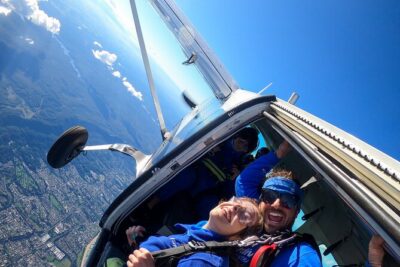
After the briefing, you board the aircraft for a scenic flight over Melbourne and St Kilda. The information gives two height figures: 14,000 feet in the summary and up to 15,000 feet in the detailed itinerary. I would treat this as an advertised maximum of about 15,000 feet rather than expect one exact altitude on every jump.
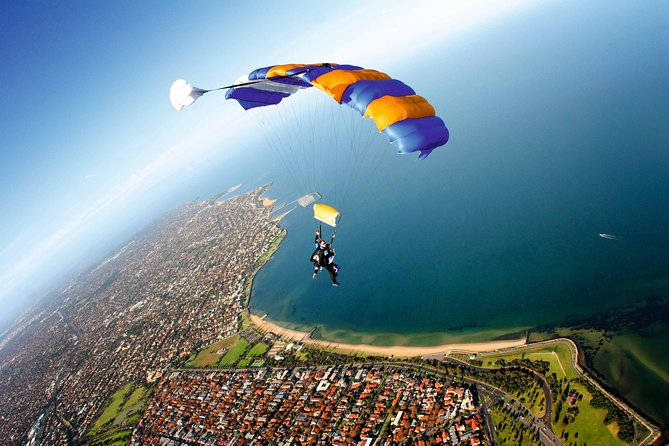
The aircraft ride gives you time to look down and let the nerves build. From that height, Melbourne spreads out below you, with Port Phillip Bay curving around the coastline. St Kilda Beach becomes part of a much wider view, and the city appears in relation to the water rather than as a collection of separate streets and buildings.
That scenic flight is an important part of the value. You are not paying only for the freefall. You are also paying for the aircraft operation, the tandem instructor, training, the parachuting levy, administration, and the chance to see the city from an unusual angle.
At the same time, the flight will not feel like a relaxed sightseeing circuit. Your attention may be fixed on the jump, the instructions, and the person attached to you. If you mainly want photographs of Melbourne from above, a regular lookout or scenic flight will be calmer and cheaper. This experience is for the sensation as much as the view.
The 60-second freefall
The door opens, the countdown begins, and your instructor takes you into freefall. The jump can reach speeds of up to 220 km/h and last up to 60 seconds. That is long enough for the first shock to pass and for you to register the coastline, the air, and the sheer speed of the descent.
The freefall is the most intense part of the activity. You may feel nervous before the jump, even if the briefing has been clear and the instructor has been reassuring. One participant described being anxious about injury and fatality statistics before the jump, then feeling calmer with the instructor’s help. That is a useful warning: you do not have to be fearless to take part, but you should be prepared for a serious rush of adrenaline.
Your instructor remains attached to you throughout the descent. Try to follow the body-position instructions rather than fight the wind. The less you tense up, the easier it is to notice the bay and coastline beneath you.
The view may be difficult to absorb during the first moments. Freefall is fast, noisy, and physically demanding in a way that a normal scenic flight is not. If you want to remember the view, make a point of looking outward after the initial shock rather than keeping your eyes fixed on the aircraft or your instructor.
More Tandem Skydives in Australia:
- Gold Coast Tandem Skydive
★ 5.0 · 467 reviews - Cairns: Tandem Skydive Experience
★ 4.9 · 282 reviews - Rottnest Island Tandem Skydive
★ 5.0 · 258 reviews - From Sydney: Tandem Skydive Experience over Beach
★ 4.7 · 234 reviews
Five to seven minutes beneath the parachute
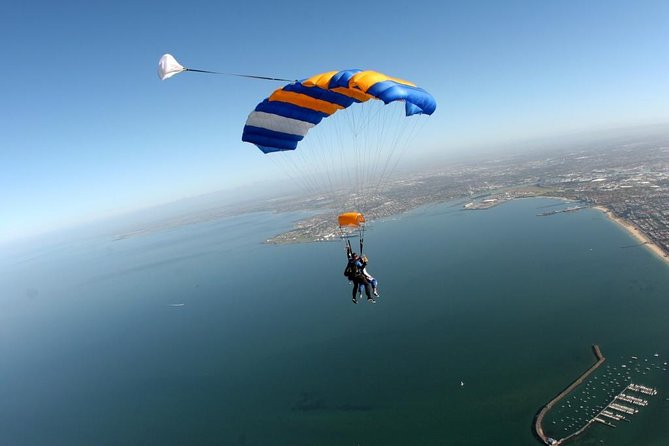
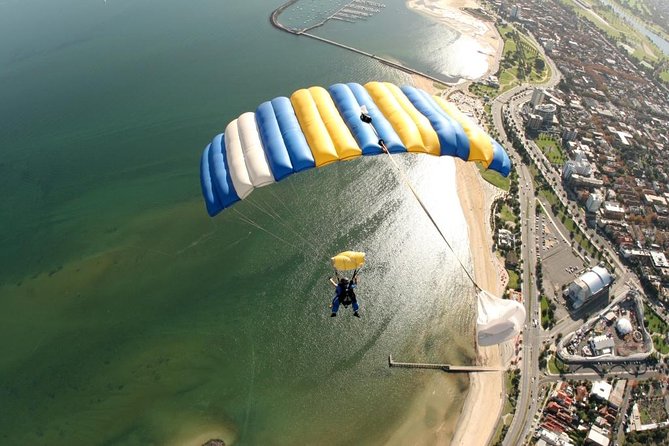
Once the parachute opens, the character of the activity changes completely. The freefall ends, and you spend about five to seven minutes under the canopy, moving more slowly above the Victorian coastline.
This is the best time to take in Melbourne and Port Phillip Bay. You have more time to look around, notice the shape of St Kilda, and enjoy the height without the same rush. If conditions allow, your instructor may let you steer the parachute, which gives you a small taste of how the canopy responds.
The parachute phase also gives you a chance to recover from the freefall. Some people may prefer this part because it combines the thrill of the jump with a calmer view. Others may find the aircraft exit and rapid descent are the only parts they really wanted.
The final landing is handled with guidance from your instructor. Listen carefully and follow the instructions for your feet and body position. The landing is one of the reasons a tandem jump suits first-timers better than attempting to learn the sport independently.
What the A$343.56 price covers
The listed price is $343.56 per person. The exact currency is not stated in the supplied information, so check the booking page before you pay, particularly if you are booking from outside Australia.
For the price, you receive:
- A qualified tandem jumper
- Training from a highly trained tandem master
- The scenic aircraft ride up to the advertised maximum altitude
- Up to 60 seconds of freefall
- The parachute descent
- A commemorative certificate
- Australian Parachuting Levy and administration fee
I consider that a reasonable price for a specialist activity with aircraft time, an instructor, equipment, and required fees included. The value is strongest if the Melbourne coastal view matters to you. You are buying a very specific experience, not simply a few minutes of entertainment.
The extra cost is the photo and video package, priced at A$179 per person at the drop zone. That is a large add-on, so decide in advance if you want proof of the jump. If you buy it, think about camera position and which side of your face will be visible. One practical piece of advice from the supplied feedback was to check that the camera captures your better side.
Without the media package, you still receive a commemorative certificate. If you are watching your budget, ask yourself if the certificate and your own memories are enough. If this is a birthday surprise or a once-only personal milestone, the photos may feel worth the extra expense.
Weather, delays, and seasonal comfort
Good weather is required, and the operator may cancel or move the activity if conditions are unsuitable. You will be offered a different date or a full refund if poor weather causes cancellation. You can also cancel for a full refund if you do so at least 24 hours before the start time. Changes or cancellations inside that window are not accepted for a refund.
The weather policy is fair, but the practical cost is time. A day can begin with a long wait while the team checks conditions. I would avoid booking this on the only free afternoon of a short Melbourne visit.
Cold is another factor. One person found a winter jump freezing and recommended a summer morning instead. The supplied information does not promise a specific seasonal temperature or clothing package, so dress with the outdoor wait and the aircraft ride in mind. Ask the operator if you need current clothing guidance.
The best plan is to leave a buffer before and after the activity. You might finish close to the expected four-hour mark, but you should not assume that timetable is guaranteed.
Age, weight, and health requirements
The minimum age is 16, subject to approval. Anyone under 18 must be accompanied by a parent or guardian. Most people can participate, but this is not suitable for pregnant women.
A maximum weight above 242 pounds, or 110 kilograms, requires application. A surcharge applies at 207 pounds, or 94 kilograms, and above. All passenger heights must be provided when booking. Give accurate details early because weight, height, and operating conditions affect approval and pricing.
The risk warning deserves real attention. Parachuting carries inherent risks, including problems connected with weather, health, aircraft operation, descent, and landing. You participate at your own risk. If you have a health concern, ask the provider before booking rather than assuming a tandem arrangement removes every physical demand.
Who will enjoy this Melbourne jump?
I would recommend it to an adult or older teenager who wants a major adrenaline experience and values a coastline view. It also works well for someone marking a birthday, anniversary, personal challenge, or first parachute jump. The instructor support makes it accessible to many first-timers, provided they meet the requirements and accept the risk.
It may suit you less if you dislike uncertainty, need a fixed timetable, or want a quiet view of Melbourne. The freefall is intense, the day can run long, and the final bill rises if you add media.
The instructor relationship is one of the strongest parts of the experience. Simon, Cleave, and Lucas were each praised for calm, friendly support, and that is exactly what you want when standing at an aircraft door. You are still responsible for making an informed choice, but you are not handling the jump alone.
Should you book it?
Book this tandem jump if you want Melbourne’s coastline to be part of a once-in-a-lifetime parachute experience, not just a backdrop from a lookout. The combination of Port Phillip Bay, St Kilda, a high-altitude aircraft ride, and up to a minute of freefall gives the activity a strong sense of place.
I would book with three rules: keep your schedule open, budget for the optional A$179 media package only if you truly want it, and read the health, weight, age, and risk requirements before paying. If poor weather would ruin your itinerary, choose a more predictable Melbourne attraction instead. If you can accept the delay risk and the physical rush, this is a memorable way to see the city from above.
FAQ
Where does the experience begin?
The stated meeting point is M.O. Moran Reserve in St Kilda, Victoria. The jump itself begins at Moorabbin Airport, and the activity ends back at the meeting point.
How long does the experience take?
The experience lasts approximately four hours. Weather and operating delays can make the total day much longer.
How high is the jump?
The detailed itinerary gives a height of up to 15,000 feet. The tour summary refers to 14,000 feet, so the exact height may vary.
How long is the freefall?
The freefall lasts up to 60 seconds and can reach speeds of up to 220 km/h.
How long is the parachute descent?
After the parachute opens, you descend for about five to seven minutes.
Is an instructor attached during the jump?
Yes. A professional tandem instructor accompanies you and guides you through the aircraft ride, freefall, parachute descent, and landing.
What is the minimum age?
The minimum age is 16, subject to approval. Anyone under 18 must be accompanied by a parent or guardian.
Are photos and videos included?
No. Photo and video packages can be purchased at the drop zone for A$179 per person.
What happens if the weather is poor?
The experience requires good weather. If the operator cancels because of poor conditions, you will be offered another date or a full refund.
Just added around Australia
- Rottnest Skydive + Hillarys Ferry package★ 5.0 · 20 reviews
- Rottnest Skydive + Perth Barrack St Ferry package★ 5.0 · 11 reviews
- Noosa: Tandem Skydive Experience★ 4.0 · 16 reviews
- Rottnest Island Skydive Including Round Trip Ferry from Fremantle★ 4.5 · 3 reviews
- Coffs Harbour Ground Rush or Max Freefall Tandem Skydive on the Beach★ 5.0 · 11 reviews
- SA Skydiving Adelaide – Goolwa★ 4.5 · 9 reviews
- Sydney, Shellharbour: 15,000ft Tandem Beach Skydive★ 4.8 · 6 reviews
- Sunshine Coast: Tandem Skydive with Beach Landing★ 5.0 · 19 reviews
Beach Skydives, compared.
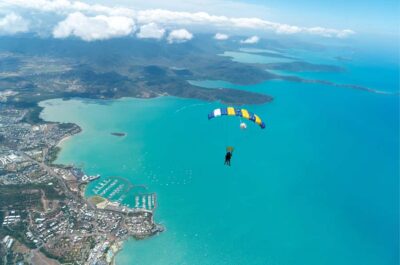
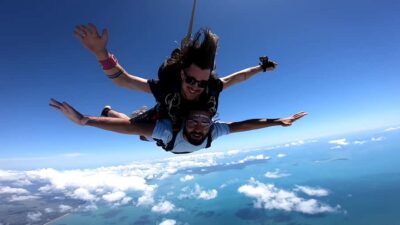
Tandem Skydiving Experience with Beach Landing
Read our review →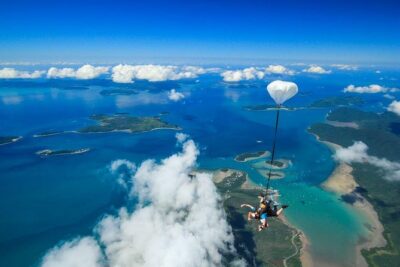
Airlie Beach Tandem Skydive Over the Whitsunday Islands
Read our review →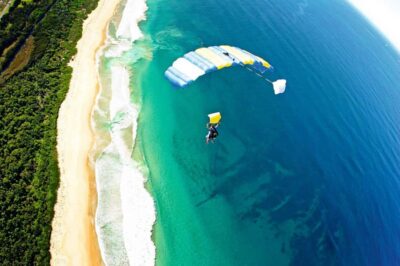
Tandem Skydive Experience over Wollongong Beach
Read our review →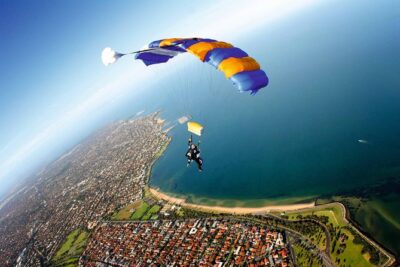
Browse the lists this tour appears in